Ever walked past a Domino’s store and felt hungry even before seeing the menu? That cheesy, garlicky aroma is enough to make anyone crave a pizza. And that’s not just a happy accident, it’s smart marketing at play. Step into a Titan showroom and the soft scent of sandalwood and leather instantly makes the place feel premium. It’s not just about the watches it’s about making you feel like you’ve stepped into a world of elegance. And what’s a movie at PVR without a tub of buttery popcorn? The scent hits you before you even reach the counter, making it almost impossible to resist. That’s not accidental cinemas let the smell of fresh popcorn drift through the halls, knowing it plays a key role in driving snack sales. No wonder 30-50% of a multiplex’s revenue comes from food!
Beyond retail and entertainment, India’s cultural landscape is deeply intertwined with scents. Every festival, every home, and every marketplace carries a distinct smell. Brands are now using these familiar olfactory cues to establish emotional connections. Whether it’s mithai shops enriched with saffron and cardamom or ayurvedic stores infused with calming sandalwood, the scent has a profound impact on perception.
This is the magic of scent marketing it works quietly, but it makes a lasting impression that we may not always notice, yet always remember.
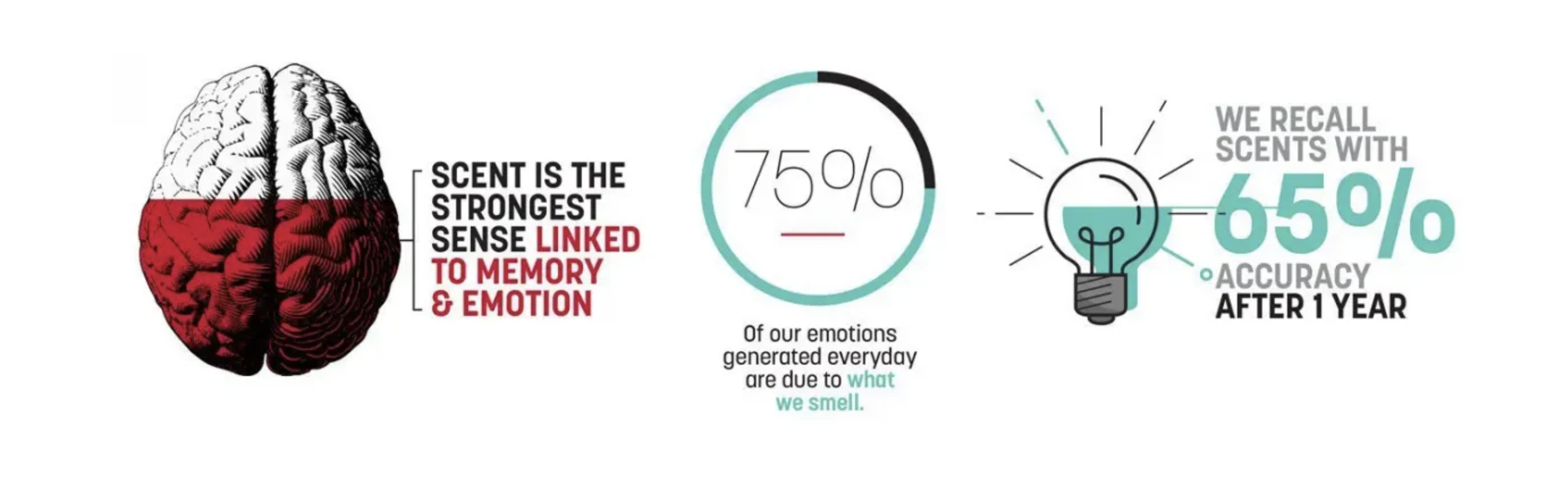
Scent branding, or scent marketing, is when businesses use specific smells to create a unique identity and improve customer experience. A good fragrance can make people feel happy, remind them of memories, and even influence their buying decisions. Research shows that our sense of smell is more deeply connected to memory than sight or sound, meaning a strategically placed fragrance can leave a stronger impression than the biggest billboard. For example,
● Sandalwood for Trust & Heritage: Jewelry and ethnic clothing stores use sandalwood scents to evoke memories of weddings and traditional rituals. ● Jasmine & Festivities: Malls and retail outlets diffuse jasmine and rose scents during festive seasons to recreate the ambiance of Indian celebrations. ● Citrus for Energy: Gyms and athleisure brands use fresh citrus fragrances to create a vibrant, energetic atmosphere
The Science Behind Scent Perception
A research experiment involving Nike shoes tested the impact of scent on consumer perception. Two identical pairs of shoes were placed in two identical rooms one room was scented with a floral fragrance, while the other was unscented. Participants examined the shoes in both rooms and were then asked to complete a questionnaire. ● 84% of respondents preferred the shoes in the scented room. ● Participants estimated the value of the scented shoes to be $10.33 higher than those in the unscented room. ● The results remained consistent even when the scent was faint enough to be subconscious. This reinforces the notion that scent marketing is not merely an aesthetic enhancement but a tangible driver of consumer behavior. While traditional marketing relies on visuals and sounds, scent marketing goes straight for the emotions.
How Leading Brands Utilize Scent Marketing
Several global and Indian brands have mastered scent-based branding to strengthen their identity and enhance customer experience: ● PVR Cinemas: The buttery popcorn scent is an unintentional but genius branding move that drives snack sales and enhances the movie-watching experience. ● Starbucks: Ensures its stores smell only of coffee, avoiding food aromas that could dilute its brand identity. ● Luxury Hotels (Hyatt, ITC Maratha): Infuse their lobbies with calming and opulent scents to make guests associate their stay with relaxation and grandeur. ● McDonald’s & Cinnabon: Cinnabon, in particular, is the master of “aroma billboard marketing” strategically placing ovens at store entrances to lure in customers with the irresistible smell of fresh cinnamon rolls.
McDonald’s launched the world’s first scented billboards in the Netherlands, diffusing the aroma of french fries through ventilators. Strategically placed within 200 meters of McDonald’s outlets, these unbranded red and yellow billboards attracted passersby by using smell as a marketing tool. Many recognized the iconic fries scent and were prompted to visit nearby stores. The campaign went viral, proving the power of scent in advertising ● Apple: Introduced a signature smell combining green apples and mint in their retail stores to create a distinctive and memorable shopping atmosphere. ● Westin Hotels: Implemented a signature “White Tea” scent in lobbies to promote relaxation and well-being among guests. ● Samsung: Employed the ‘Intimate Blue’ scent to underscore the brand’s distinctive characteristics and appeal to a broad consumer base. ● FabIndia & Tanishq: Use soft, earthy aromas like sandalwood and jasmine to create an authentic, heritage-driven shopping experience.
Conclusion
Scent marketing is no longer a background trick; it’s an essential branding tool. Just like the aroma of fresh coffee makes a Starbucks visit feel complete or the scent of popcorn defines a movie night, businesses are harnessing scents to create emotional connections with customers. The next time you step into a store, pause for a moment you might just realize that the invisible hook pulling you in isn’t a signboard or a sale, but the power of scent.


:max_bytes(150000):strip_icc():format(webp)/McDonalds-Debuts-the-Worlds-First-Scented-Billboards-FT-BLOG0424-02-623d9b3773b64f429919fa146677fd56.jpg)


