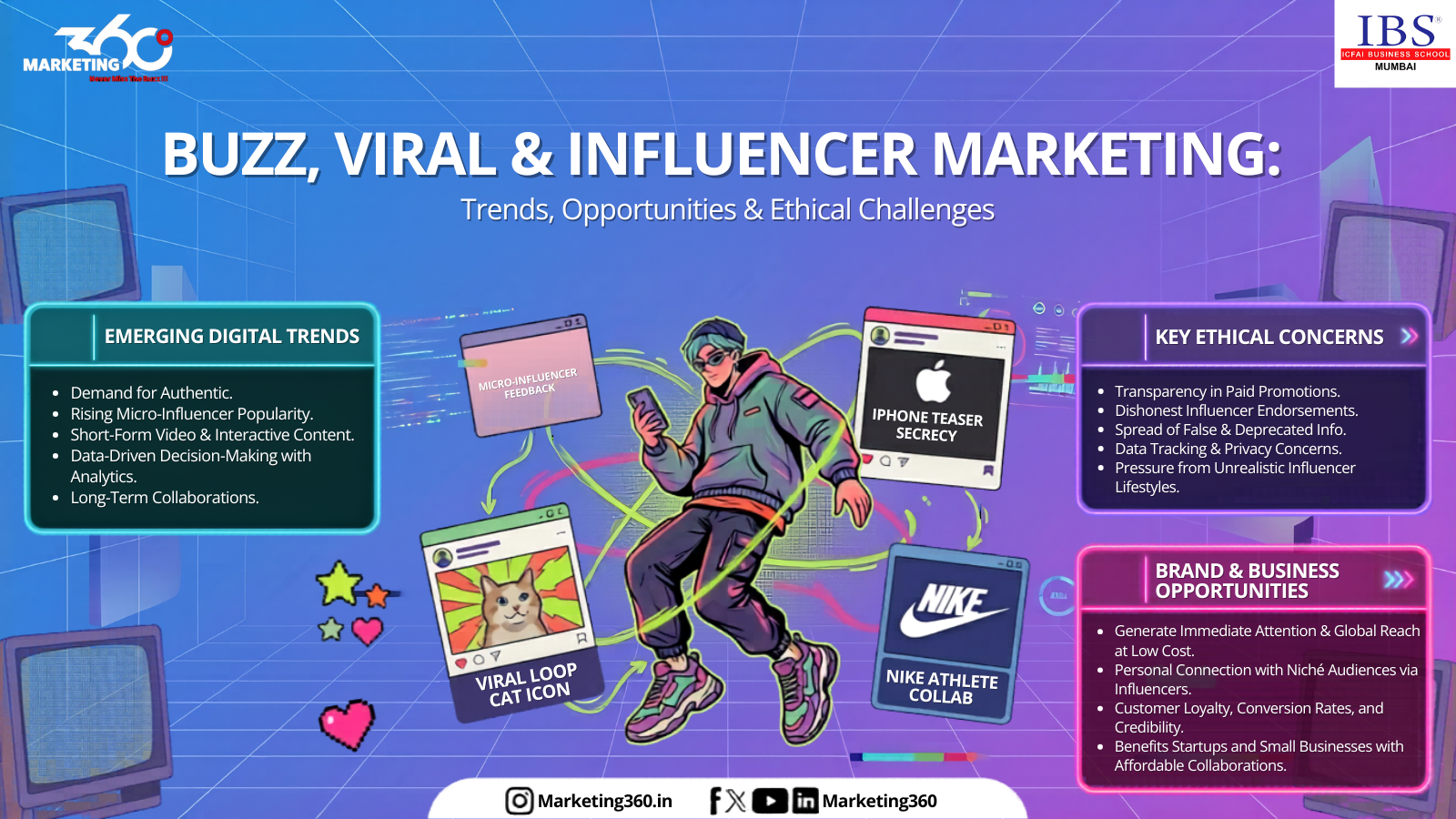
In this digital era, consumers are not just passive viewers of ads. They actively engage, share their thoughts, and shape purchasing decisions on social media platforms. Because of this, modern marketing has moved from traditional methods to more people-focused strategies like buzz, viral, and influencer marketing. These strategies help brands connect emotionally with audiences, but they also raise ethical issues that need thoughtful attention.
Buzz, Viral, and Influencer Marketing:
Buzz marketing focuses on creating excitement and curiosity around a product or campaign so that people naturally talk about it. For instance, when releasing a new iPhone, Apple frequently releases teaser videos or limited information. This controlled secrecy sparks discussions across social media, news platforms, and tech communities, creating anticipation without heavy advertising.
Viral Marketing relies on content that spreads rapidly from one user to another, much like a digital chain reaction. Netflix’s Wednesday dance trend is an example of viral marketing among Gen Z. Users recreated videos on Reels and Shorts, turning a single scene into a popular social media phenomenon.
Influencer Marketing involves brands collaborating with social media personalities who have strong credibility and loyal followers. A strong example is Nike, which partners with athletes and fitness influencers to promote its products. When these influencers wear Nike gear during workouts or competitions, the promotion feels authentic rather than forced, making it more persuasive for followers. These approaches clearly reflect evolving marketing trends in the digital space.
Emerging Trends in Digital Marketing:
One noticeable trend is the demand for authenticity. Today’s audiences prefer genuine experiences to polished commercials. Micro-influencers are becoming increasingly popular because they maintain closer relationships with their followers. Short-form videos, live streams, and interactive content are boosting engagement, especially in viral marketing campaigns. Data-driven decision-making is another important trend. Brands now use analytics to track engagement, identify the right influencers, and measure the success of their campaigns. Long-term collaborations are taking the place of one-time promotions in influencer marketing, showing how marketing trends continue to evolve.
Opportunities for Brands and Businesses:
Buzz, Viral, and Influencer Marketing offer significant growth opportunities. Buzz marketing helps generate immediate attention, especially during product launches. Viral Marketing allows brands to reach global audiences at a relatively low cost. By providing exposure that traditional advertising might find difficult to attain, a single creative campaign can obtain it.
Brands can establish a personal connection with niche audiences through influencer marketing. It boosts customer loyalty, conversion rates, and builds brand credibility. Small businesses and startups benefit greatly, as influencer collaborations are often more affordable than mass media advertising.
Ethical Concerns and Challenges:
These tactics raise moral questions, even though they work well. A major issue is transparency, especially when paid promotions aren’t clearly stated. Influencers who promote products dishonestly might mislead consumers. In the fight for attention, viral marketing can sometimes spread false or exaggerated information. Excessive data tracking and targeted ads also raise privacy concerns. Young audiences may suffer from the pressure that influencers show via their unrealistic lifestyles. To maintain consumers’ trust, brands must ensure their messaging is responsible, clear, and follows ethical standards.
Buzz, viral, and influencer marketing have changed how brands communicate with people online. Viral campaigns and influencer partnerships catch attention and spark conversation, but it’s all pointless if brands don’t act fairly. When brands remain honest, genuine, and socially responsible, they form lasting connections with people. This is how they build trust and continue to grow in a connected marketplace