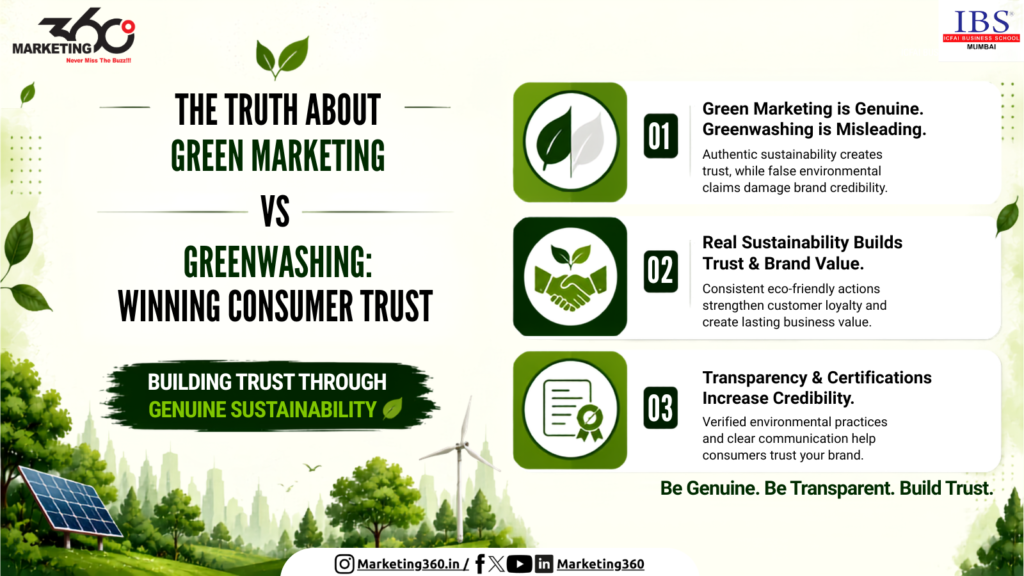
Green Marketing is genuine Greenwashing is misleading
Real sustainability builds trust and brand value
Transparency and certifications increase credibility
Introduction:
With environmental consciousness on the rise, Green Marketing has emerged as a key approach companies must adopt to attract environmentally conscious consumers. Companies are becoming more inclined towards sustainability within business, green packaging, and ethical sourcing to improve brand image. Modern customers expect companies to prove their sincere attitude toward the environment instead of advertising only the sustainability of their products. Companies that sincerely share information about their environmental initiatives can build stronger relationships with their customers and thus achieve a competitive advantage in today’s market.
What is Green Marketing?
Green Marketing entails the marketing of products and services that are environmentally friendly. This process entails the use of methods that minimize the environmental footprint through sustainable production, recycling packaging, energy efficiency, and resource management. Green Marketing Success is about doing things as opposed to making claims. Companies that go green end up having loyal customers, better brands, and sustained growth. Understanding Greenwashing: Although many businesses are truly committed to sustainability, there are also some businesses that practice Greenwashing and make false or exaggerated environmental claims without any proof.
Examples of Greenwashing include:
Using vague terms such as “eco-friendly” without certification.
Highlighting one environmentally friendly feature while ignoring harmful business practices.
Displaying misleading green labels or imagery without verification.
How Businesses Can Build Consumer Trust:
Consumer trust can be gained by being transparent and accountable. Businesses need to concentrate on genuine environmental efforts rather than deceptive marketing tactics. Effective Green Marketing strategies include:
Issuing transparent sustainability reports.
Getting certified for environmental standards.
Using eco-friendly packaging.
Quantifying environmental performance.
Improving sustainability efforts constantly.
Business Example:
Patagonia – A Successful Green Marketing Strategy The outdoor clothing company Patagonia is well-known for its true Green Marketing efforts. This company promotes repair and reuse of its clothing via the “Worn Wear” campaign and not just the purchase of its products. Other measures that Patagonia adopts include the use of recycled products, participation in environmental projects, and disclosing its sustainability objectives. Such efforts show that Patagonia is truly dedicated to environmental protection and earn the loyalty of consumers.
The distinction between true sustainability and Greenwashing has become more and more important nowadays as we live in an extremely competitive business world. It is necessary to understand that Green Marketing does not constitute only some kind of marketing approach; it should be perceived as a business practice that helps companies build credibility and establish relationships with customers.