Hidden Luxury Psychology: Why Consumers Crave Prestige

Key Takeaways:

  • Understand the psychological reasons behind consumers’ attraction to luxury.
  • Learn how prestige influences buying decisions and brand perception.

Introduction:

Imagine walking into a store and being instantly drawn to a premium product, even when there are cheaper alternatives available. You pause, admire it, and feel a subtle desire to own it. What creates this feeling? This is the power of Luxury Psychology.

Luxury is not just about price or quality; it is about perception, emotion, and identity. Consumers do not just buy luxury products; they buy status, confidence, and a sense of belonging.

In today’s world, where choices are endless, understanding why people crave prestige has become essential for businesses and marketers.

Why it is important today:

In a highly competitive and saturated market, products alone are no longer enough to attract consumers. People are increasingly influenced by emotional and psychological triggers rather than just functional benefits.

Luxury brands thrive because they tap into deeper human desires, status, exclusivity, and self-expression. Understanding luxury psychology and consumer behaviour helps businesses position their offerings in a way that appeals to these desires. It allows brands to create not just products, but experiences that people aspire to be a part of.

Without this understanding, even high-quality products may fail to create a strong impact or emotional connection.

Understanding the process:

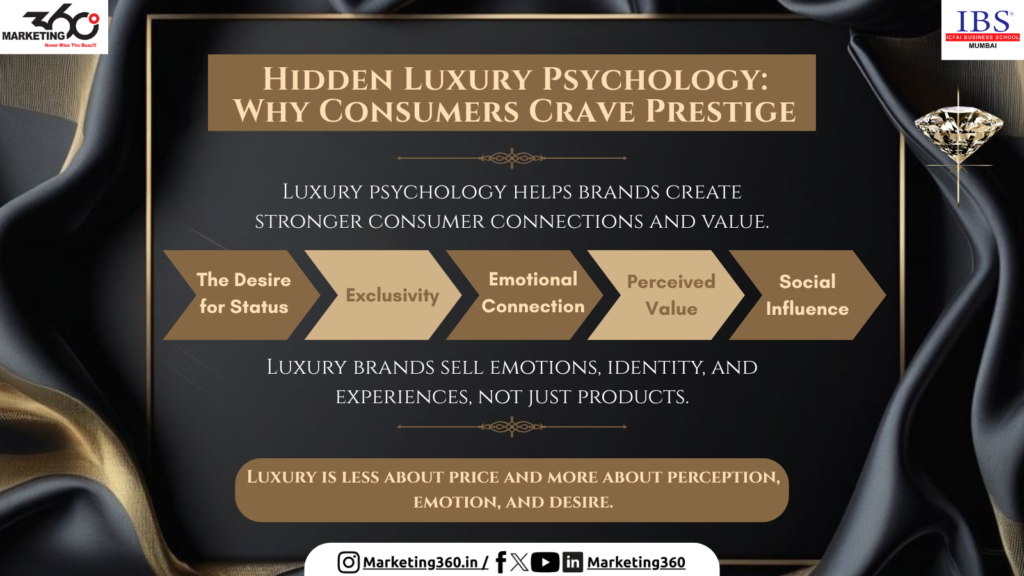
1. The Desire for Status – “What does it say about me?”

Luxury products often act as symbols of success and achievement. People use them to communicate their social status and personal identity. Owning something premium creates a sense of pride and recognition. This is why consumers are willing to pay more not just for the product itself, but for what it represents. It becomes a reflection of their lifestyle and aspirations.

2. Exclusivity – “Not everyone can have it.”

Scarcity increases value. When something is limited or hard to obtain, it becomes more desirable. Luxury brands use exclusivity to create a sense of uniqueness and privilege. Consumers are naturally drawn to things that feel rare. It gives them a feeling of being part of an elite group, which enhances the emotional value of the purchase.

3. Emotional Connection – “How does it make me feel?”

Luxury is deeply emotional. It is not just about owning a product, but about the experience associated with it. From packaging to storytelling, every element is designed to evoke feelings of excitement, confidence, and satisfaction. People remember how a brand makes them feel more than what it sells. This emotional connection builds long-term loyalty.

4. Perceived Value – “Is it worth it?”

Luxury brands focus on perception rather than just functionality. High prices often signal superior quality, even if the actual difference is minimal. Consumers associate premium pricing with better craftsmanship, durability, and prestige. This perception influences their willingness to buy and trust the brand.

5. Social Influence – “What do others think?”

People are influenced by what others admire or approve of. Luxury products often gain popularity through social proof from celebrities, influencers, and peer groups. When consumers see others valuing a brand, it increases their own desire to be associated with it. This creates a cycle where prestige reinforces demand.

Why does this approach work so well?

This approach works because it aligns with fundamental human psychology. People naturally seek recognition, belonging, and self-expression. Luxury brands successfully tap into these needs by creating aspirational value.

Instead of focusing only on features, they build narratives and identities. Consumers are not just buying a product, they are buying a story, a lifestyle, and a feeling.

When businesses understand these psychological drivers, they can design strategies that go beyond selling and focus on creating meaningful experiences.

Conclusion:

Luxury is not defined by price alone, it is defined by perception and emotion. Consumers crave prestige because it fulfills deeper psychological needs such as status, exclusivity, and self-worth.

By understanding luxury psychology and consumer behaviour, businesses can create stronger connections with their audience and position their brands more effectively. Just like a premium product that instantly captures attention, a well-crafted strategy based on human behaviour leaves a lasting impression.

In the end, success lies not in offering more, but in offering something that feels meaningful, desirable, and worth aspiring too.

External Link: https://bit.ly/4nJk2yl

Aastha Jain

Content Writer

Dhruvi Chandel

Graphic Designer

Vidhi Ravaria

Content Editor 

Leave a Comment

Your email address will not be published. Required fields are marked *