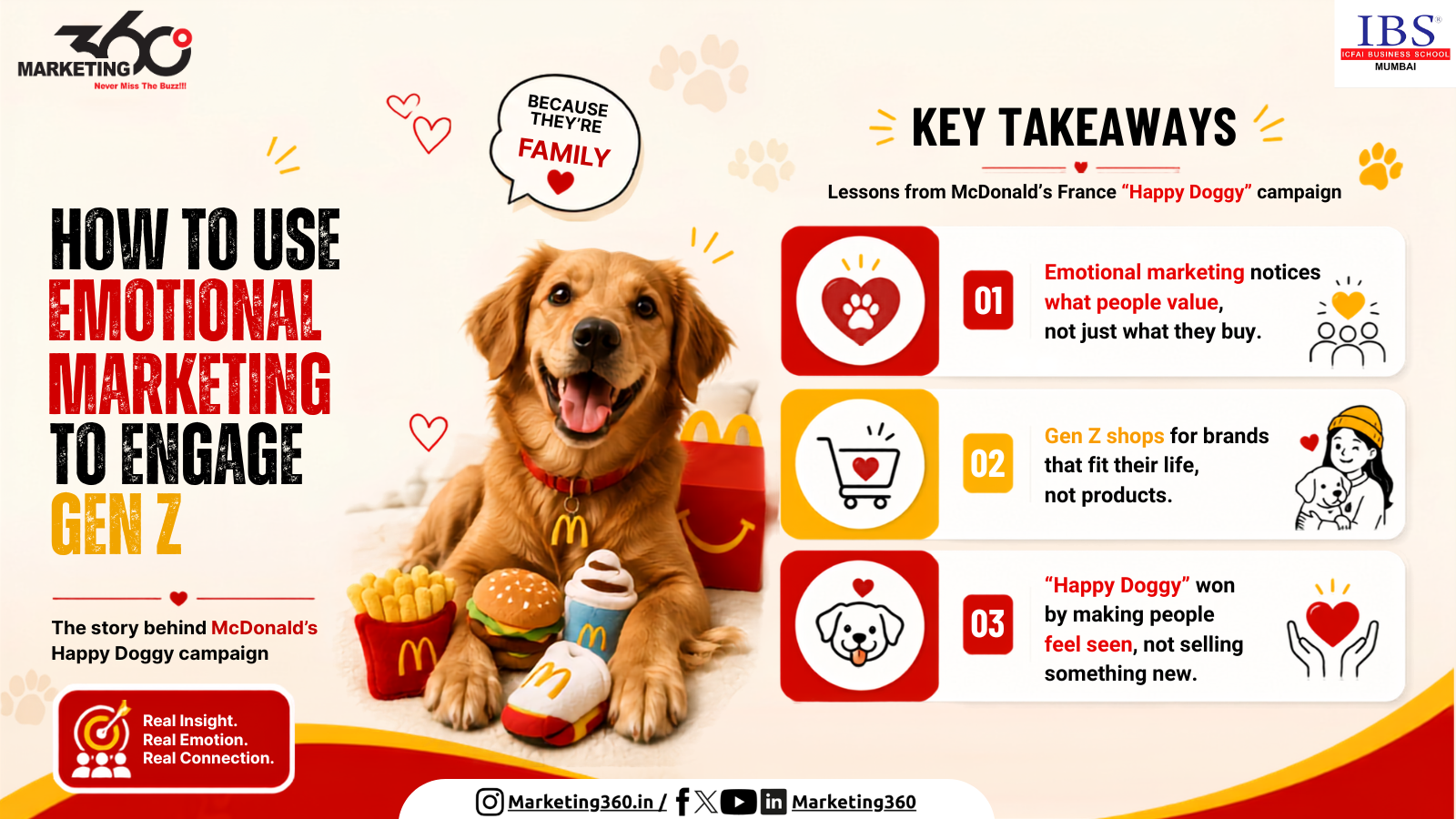
Emotional marketing notices what people value, not just what they buy.
Gen Z shops for brands that fit their life, not products.
“Happy Doggy” won by making people feel seen, not selling something new.
Introduction
Picture this: you’ve just picked up your usual McDonald’s order after work. On your way out, you spot something odd on the counter – a toy. Not for a kid. For the dog waiting at home. Weird? Maybe, at first glance. But if you’re Gen Z, it probably just feels… thoughtful. That’s the instinct McDonald’s France tapped into with “Happy Doggy,” a limited-run line of dog toys shaped like its most iconic menu items. It looked like a cute gimmick. It was actually a sharp piece of emotional marketing. Instead of asking “what do our customers want to buy?”, McDonald’s asked something better: who do our customers actually love? Turns out, the answer wasn’t a new burger or a discount code – it was the dog curled up on the couch. That one shift in thinking turned a promo stunt into something people genuinely felt.
Families Look Different Now
McDonald’s has spent decades selling itself as the backdrop for family memories – birthday parties, Happy Meals, fries shared across the table. But “family” doesn’t mean what it used to. In France, roughly one in three households has a dog, and close to 69% of owners call their pet a full member of the family. For Gen Z specifically, that bond runs even deeper – nearly half say their dog is the most important living being in their life. McDonald’s didn’t treat that as a throwaway stat. It read it as a shift in culture. The campaign was never really about toys. It was McDonald’s admitting that, for a lot of young people, buying something for the dog feels just as meaningful as buying something for themselves. And that’s the real difference with Gen Z marketing. Younger consumers aren’t just buying things, they’re buying into experiences that reflect who they are and what they value. The brands that stick are the ones who clock that shift before anyone else does.
Why It Worked
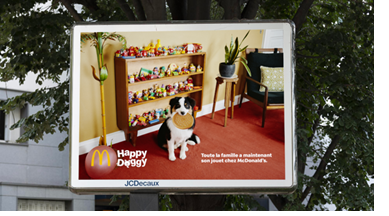
Here’s the thing about “Happy Doggy” that makes it worth studying: it leans on one of the oldest rules in branding. People don’t buy things because they’re logical. They buy things because of how they make them feel. The four toys in the lineup – Fun’Fries, Fly’Bun, Sundae’Ball, Chauss’Pom – aren’t groundbreaking products. Nobody’s rewriting the dog-toy industry here. Their value is in the moment they create. You walk in with your own McDonald’s bag, and your dog gets one too. Suddenly, grabbing fast food on a Tuesday turns into a little ritual you share with your dog. That’s the story people tell their friends. That’s the photo that ends up on Instagram. This is exactly why emotional marketing beats feature-based marketing, over and over. Any competitor can copy a product spec. Nobody can copy the feeling you built. There’s a second lesson buried in here too: Gen Z wants brands that show up inside their lives, not ones that interrupt them. McDonald’s didn’t force its way into pet culture or try to become a dog-toy brand. It just noticed that pets were already part of the family and found a genuine way to celebrate that. Even the tagline nailed it: “Now every member of the family has their own McDonald’s toy.”
One of the biggest myths in marketing is that emotional campaigns need a big budget or a big moment. They don’t. Sometimes all it takes is noticing something everyone else walked right past. McDonald’s wasn’t trying to break into the pet industry. It wasn’t competing with dog-toy brands. It just paid attention to how its customers’ lives had actually changed – dogs are family now and responded with something warm and a little playful. That’s the real lesson here. The brands people stay loyal to aren’t always the loudest ones. They’re the ones paying attention. Stop asking “what can we sell them?” Start asking “what actually matters to them?” Do that consistently, and you’re not just running campaigns anymore – you’re building memories people want to keep.