
Key Takeaways:
- People often choose products, brands, and content that reflect their identity, values, and aspirations rather than utility alone.
- Pinterest succeeds because it lets users curate ideas and inspirations that feel personal and meaningful to them.
- Strong brands build lasting connections by making consumers feel seen, understood, and represented.
Introduction:
One image. That’s all you opened Pinterest for. Forty minutes later you’re three boards deep in café interiors in cities you’ve never been to, a capsule wardrobe you’ll probably never build, and a quote that somehow said the thing you couldn’t. And weirdly, none of it felt like wasted time. It felt like… you. That’s not a coincidence, and it’s definitely not just an algorithm doing its job. There’s a concept behind that feeling called self-expression theory and it’s one of the most useful lenses a marketing student can have. Simply put, the things people choose aren’t just things. They’re statements. Small, quiet ones-but statements nonetheless. “This is the kind of person I am. This is the life I’m reaching for”. Once you start seeing it that way, consumer behaviour starts making a lot more sense.
A Mood Board for the Person You're Becoming
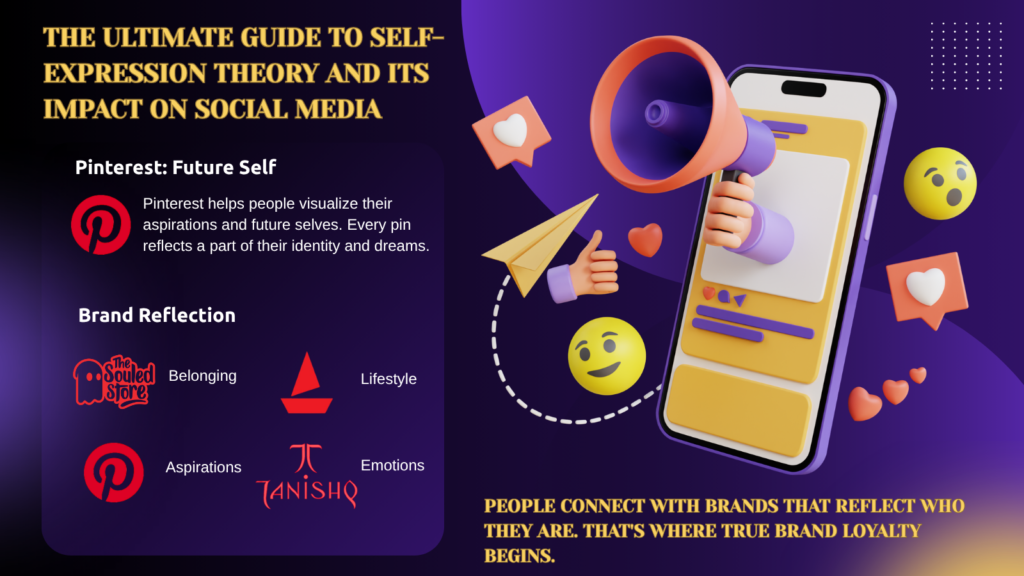
What makes Pinterest different from every other platform is what people actually do on it. Instagram is about showing where you’ve been. Twitter is about saying what you think. Pinterest is about mapping out who you want to be. A board called “My Future Home” isn’t interior design research – it’s a daydream with a filing system. “Dream Travel Destinations” isn’t trip planning; it’s a mood board for a life still being imagined. Nobody logs in thinking “I’m going to define my identity today.” But scroll through someone’s Pinterest for five minutes and you know more about them than most people who’ve met them in real life. Every pin is a small vote. This is what I’m drawn to. This is what feels like mine. That emotional ownership is exactly why people don’t just use Pinterest; they feel attached to it in a way that’s hard to explain out loud.
When Brands Become a Reflection of Us
Once you understand how people use products to communicate who they are, you start noticing it in brands you interact with every day. The Souled Store doesn’t really sell T-shirts. It sells belongings. When someone walks into a room wearing a shirt with their favourite show or cricket team on it, they’re not just dressed, they’re saying something. About what they grew up loving, what still matters to them, and who they’ll have a conversation with.The shirt serves a social purpose that a plain white tee cannot achieve.This is also where brand identity becomes important, because consumers often choose brands that reflect the image they want to project. BoAt figured out something similar, just in a different category. The earphones are fine, but what people are actually buying is the feeling of being the kind of person who owns boAt. Young, relaxed, a little cool without trying too hard. The product fits a self-image first, specs second.
Tanishq’s Rivaah campaign is worth looking at closely if you want to see this at its most emotional. It never really led with the jewellery. It led with a daughter getting dressed for her wedding, a mother watching, and a ritual being passed down. People didn’t watch that ad and think about gold rates. They thought about their own families, their own ceremonies, the women in their lives. That recognition, “I see myself in this”, is what Self-Expression Theory looks like when a brand gets it exactly right. Strong storytelling like this also helps strengthen a brand’s brand identity in the minds of consumers. And for us as marketing students, the lesson is uncomfortable but important: features don’t move people. Mirrors do. The campaigns that land hardest are the ones where the customer stops seeing an ad and starts seeing themselves.
Conclusion:
Nobody consciously thinks, “this purchase reflects my identity,” while they’re adding something to cart. It happens faster than that – a gut feeling, a pull, a “this just feels like me” that’s hard to argue with. That quiet, almost automatic process is self-expression theory doing exactly what it does. And the brands that have figured this out aren’t trying to convince anyone of anything. They’re just holding up a mirror at the right moment. That’s not manipulation; that’s marketing that actually understands people. Build campaigns that reflect your audience back at themselves, and you won’t have to chase their attention. They’ll come looking.
External Link:https://bit.ly/4vu6GZg

Riya Giri
Content writer

Dhruvi Chandel
Graphic designer

Lysandra Monteiro
Content Editor