Understand how Dark Patterns influence consumer decisions through deceptive interface design.
Discover common manipulative techniques used across websites, apps, and e-commerce platforms.
Introduction:
The digital age has made online platforms an integral part of our daily lives. Almost every kind of activity, shopping, entertainment, banking and education is done through websites and mobile apps. Businesses are always thinking of new ways to attract customers, but not all of them are in the best interest of the user. Dark Patterns have been one of the most discussed aspects of modern digital experiences among these practices. These carefully designed interfaces subtly influence users to make decisions they may not have intended to, raising important questions about transparency and consumer trust.
The purpose of a website or application is to make it easier to make a decision, but some interfaces are designed to make it complicated. These deceptive designs prompt people to buy more products, sign up for services they don’t want or share personal information without realising it. The tactics are so subtle that users often don’t realise they’re being manipulated until they’ve taken the action.
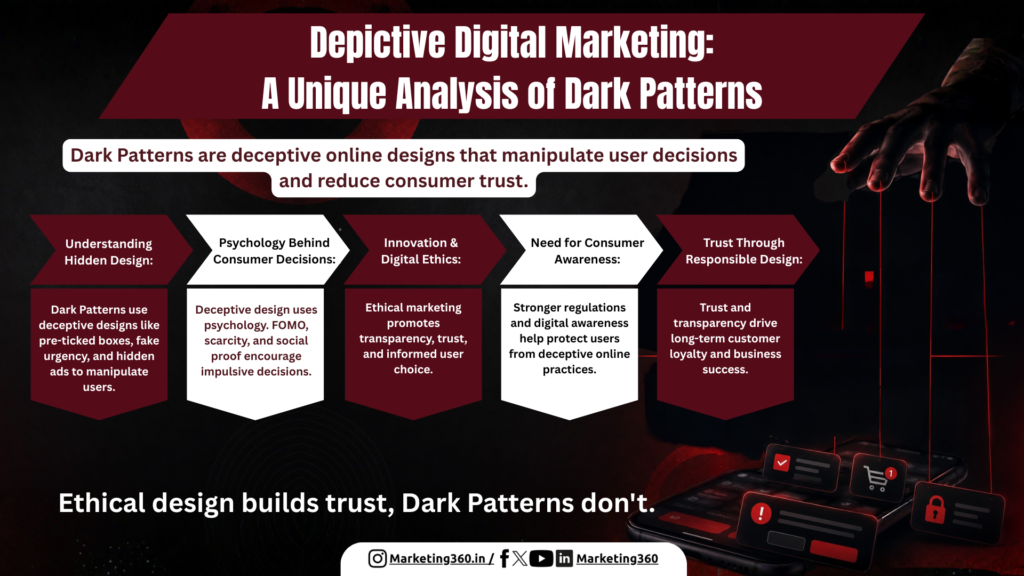
Examples of common practices include pre-selected subscription boxes, countdown timers that generate a false sense of urgency, complex cancellation procedures, and ads masquerading as regular content. These tactics may bring companies short-term gains, but they tend to make consumers feel manipulated when they discover what has occurred.
The Psychological Influence Behind Consumer Decisions:
The success of deceptive interface design depends on an understanding of human psychology. When shopping online, consumers often make snap decisions. Sometimes, this tendency is exploited by designers who leverage a variety of visual cues, emotional triggers and strategically placed buttons to lead users towards profitable decisions.
Fear of missing out, scarcity messaging, social proof, and convenience all impact buying behaviour. Strategically combining these reduces the time users spend evaluating alternatives and makes impulsive decisions more likely to occur. This demonstrates how design can influence behaviour without being directly persuasive.
Balancing Innovation with Digital Marketing Ethics:
In today’s digital landscape, businesses are operating in a highly competitive environment and improving conversion rates is often seen as a top priority. But sustainable growth is based on the confidence of customers, not short-term gains. Digital Marketing Ethics focuses on transparency, honesty and respect for consumer choice and advocates for organisations to develop relationships instead of exploiting cognitive biases.
Ethical digital experiences allow users to be transparent, easy to navigate and offer simple choices. Instead of compelling choices, they empower consumers to make choices. Companies that embrace openness are more likely to win customer loyalty, positive word-of-mouth and long-term brand credibility.
The Growing Need for Consumer Awareness:
Governments, regulators and consumer advocacy groups are becoming increasingly aware of the dangers of deceptive online practices. A lot of countries are introducing stricter rules, requiring businesses to be more transparent around pricing, subscriptions and consent requests. The efforts aim to protect users from deceptive interfaces, while ensuring fair competition.
But regulation alone will not be able to solve the problem. Consumers also need to be more digitally savvy in terms of reading terms and conditions carefully, not purchasing on impulse and checking subscription options before making purchases. Small gestures of attention can prevent costly mistakes and encourage companies to develop more equitable practices.
Building Trust Through Responsible Design:
The future of online business is trust, not manipulation. While Dark Patterns may increase short-term engagement/sales, they often hurt customer satisfaction and brand reputation in the long run. Whereas companies that adhere to Digital Marketing Ethics advocate authentic customer experiences based on truth and transparency.
A responsible interface is not only a moral responsibility, but it is also a competitive advantage. In an increasingly informed digital marketplace, companies that are transparent and respect consumer autonomy are better able to retain loyal customers. As consumers become more aware of manipulative tactics, trust will become one of the most valuable assets any brand can own.
Conclusion:
Technology should simplify lives, not quietly influence decisions that users never intended to make. As digital interactions continue to grow, businesses must recognise that lasting success comes from transparency rather than manipulation. Dark Patterns may offer immediate commercial benefits, but they undermine consumer confidence and weaken long-term relationships. By adopting ethical design principles and encouraging informed decision-making, organisations can create digital experiences that benefit both businesses and consumers, paving the way for a more trustworthy online ecosystem.