
Key Takeaways
- Real-time, two-way customer communication is enabled through conversational marketing.
- Chatbots and live chat help qualify leads and speed up conversions.
Introduction
Customers today demand prompt responses. People no longer want to fill out extensive forms or wait hours for an answer when they visit a website with an issue. Conversational marketing, a tactic that emphasizes two way, real time communication, has become more popular as a result of this shift in behavior. Brands now have genuine, human-like discussions rather than pushing messaging. By connecting with prospects at the ideal time, this strategy boosts engagement and leads.
It engages people when they are most interested by utilizing tools such as chatbots, live chat, and messaging platforms. These discussions turn curiosity into action by lowering friction and streamlining the consumer journey.
What Is Conversational Marketing?
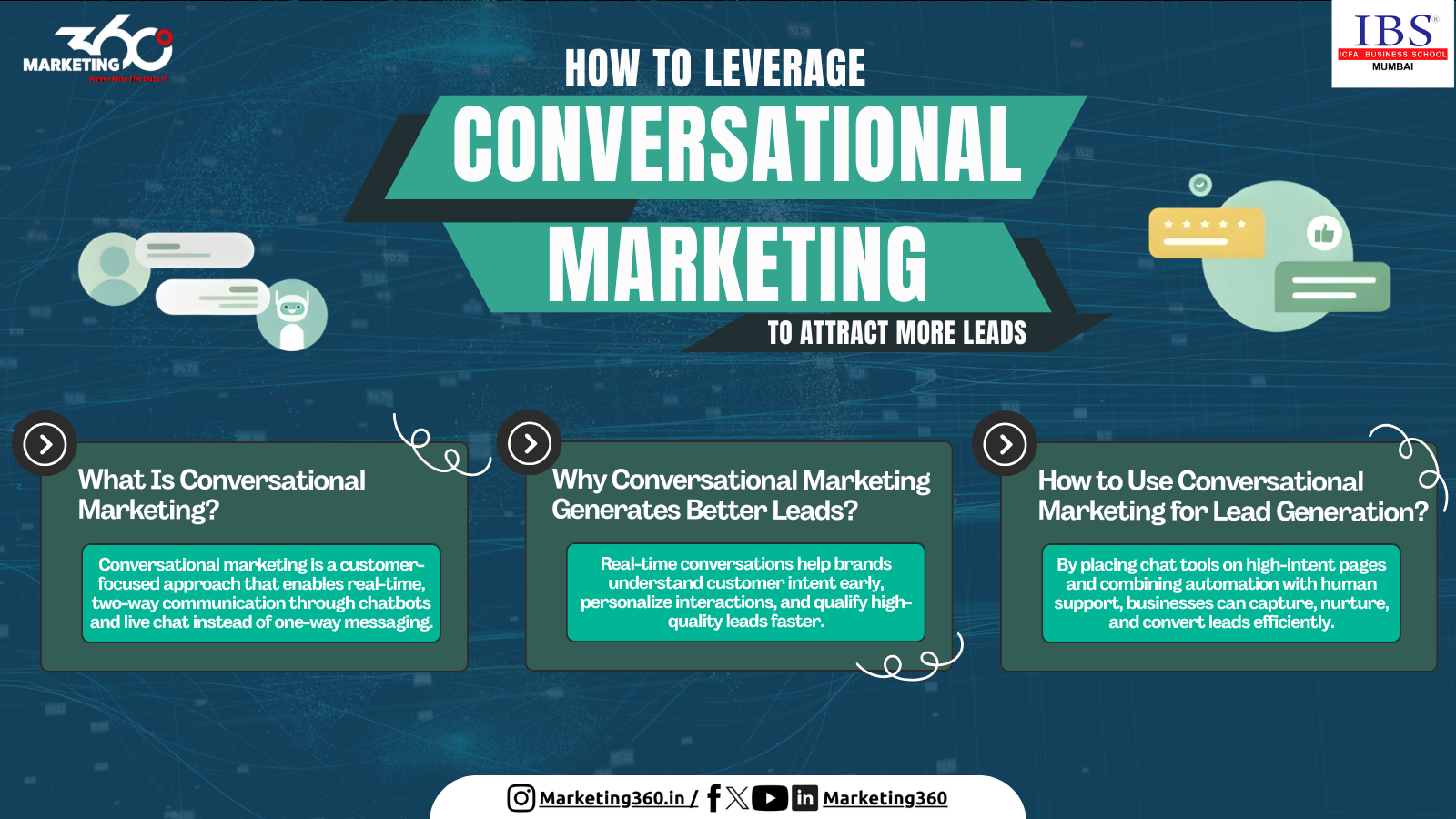
Conversational marketing is a customer focused approach that emphasizes discussion over one way communication. It allows for immediate interaction, in contrast to conventional lead generating techniques that rely on static forms and postponed follow ups. Businesses can respond to inquiries, suggest solutions, and lead prospects through the funnel in real time using either live agents or automated chatbots.
The way people communicate in daily life is reflected in this tactic. Customers demand the same simplicity of use and responsiveness from brands as messaging applications become an integral part of everyday life. Businesses appear more personable and reliable when they adjust to this expectation.
Why Conversational Marketing Generates Better Leads?
One of the key advantages of conversational marketing is better lead quality. Conversations allow marketers to understand consumer intent before gaining contact information. By asking relevant questions, businesses may swiftly qualify leads and identify prospects who are genuinely interested.
Personalization is also very crucial. Addressing users by name, offering relevant suggestions, and responding promptly boost confidence. When customers feel heard and understood, they are more likely to share information and complete the purchase process.
Additionally, Conversational tools also aid in lead generation. Businesses can segment leads according to needs, budget, or purchase readiness by posing intelligent & focused queries. As a result, sales teams save time and increase conversion rates by receiving qualified leads rather than generic inquiries.
How to Use Conversational Marketing for Lead Generation?
Businesses need to concentrate on timeliness and relevancy in order to effectively use conversational marketing. High-intent pages, including landing pages, product pages, and pricing sections, should have chat tools. These touchpoints are great for initiating discussions because they show interest.
Simple, goal-oriented conversations are ideal. Information should be gathered gradually rather than all at once. Chatbots can answer FAQs, schedule demos, and forward qualified leads to sales teams, all of which are examples of how automation helps manage scale. However, when discussions get complicated, human assistance needs to be accessible.
Lastly, companies can efficiently track, nurture, and follow up with prospects by connecting conversational tools with CRM and marketing platforms. This guarantees that discussions continue into long-term relationship building rather than stopping at engagement. Better data management is made possible by this integration, which guarantees that each encounter is noted and examined for more in-depth consumer insights. By offering a cohesive perspective of the client journey, it also aids marketing and sales teams in coordinating their efforts. This methodical follow-up eventually boosts conversion rates and fortifies client loyalty.
Conclusion
By substituting meaningful discussions for static encounters, conversational marketing revolutionizes the way firms generate leads. Brands can increase conversions, convert leads more quickly, and foster trust by interacting with consumers in real time. Conversation is now necessary for sustainable success in a cutthroat digital environment. These are certain measures used by companies/brands for lead generation as well as to cater for a certain class of customers. Meanwhile, brand image makes a significant impact on consumers’ minds as they have a preferred brand for every product or service they use in their day-to-day life.
External Link : https://bitly.cx/ramNV

Manaswi Bhanushali
Content writer

Tirth Dave
Graphic designer

Vidhi Ravaria
Content Editor