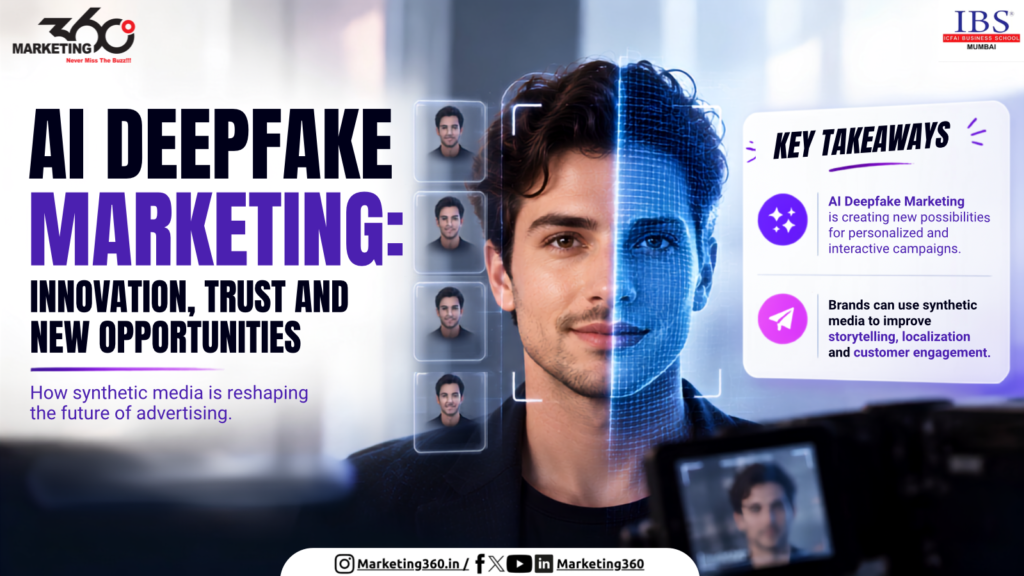
AI Deepfake Marketing is creating new possibilities for personalized and interactive campaigns.
Brands can use synthetic media to improve storytelling, localization and customer engagement.
Introduction:
The concept of AI Deepfake Marketing revolutionizes the manner in which brands are creating digital experiences using AI and real-life synthetic visuals, videos, and voice recordings. Unlike the use of ads to promote brands, marketers can design more personalized marketing campaigns that help customers identify with the brand. The use of virtual influencers and brand ambassadors through AI provides marketers with a fresh approach for capturing people’s attention. But at the same time, it poses a crucial challenge as to how brands can innovate without compromising reality to consumers.
Why Deepfake Advertising Is Creating New Opportunities
Another benefit of Deepfake advertising is its capability to enhance marketing campaigns in terms of interaction and flexibility. Brands can develop localized marketing campaigns using various languages, voices, or visual cues while not having to produce entirely new advertising. In addition, AI can help companies try out stories and personalize marketing content.
For example, marketing campaigns may involve interacting with an avatar of celebrities developed digitally or sending personalized content to customers. Such interactions can be very engaging because they provide people with entertainment and at the same time are customized. Modern research demonstrates that people are becoming more aware of AI-generated ads.
The Trust Challenge
However, the key issue related to AI Deepfake Marketing is the trust of customers. If audiences have difficulties discerning whether content is real or artificial, then they may question ads that are seen. Moreover, using the face or voice without consent of the person is considered unethical.
Thus, consent must be sought, as well as making the information about usage of AI obvious.
AI Deepfake Marketing is an essential step forward in contemporary digital marketing. It can help enhance personalization, creativity, and consumer engagement, but the effectiveness of this approach is largely determined by its ability to build trust. Deepfake Advertising must thus focus on transparency, consent, and good communication. Companies capable of successfully combining innovation and ethics in their marketing campaigns will find themselves in an advantageous position.