
Key Takeaways:
- The stakeholder matrix helps prioritize stakeholders.
- It plots stakeholders based on their power and their interest.
- The matrix is dynamic in nature.
Introduction
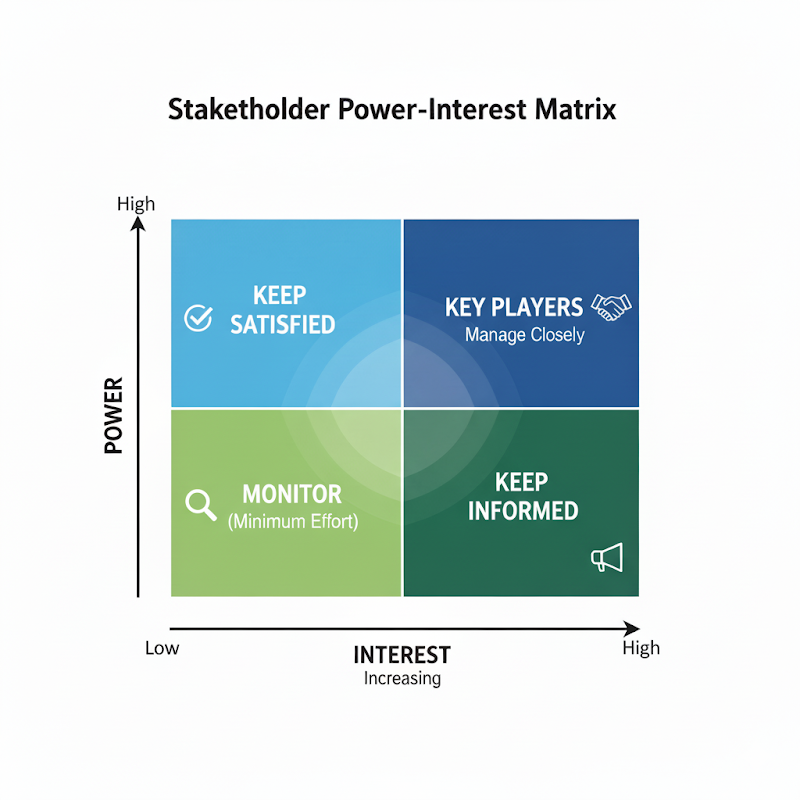
Every business, project, or initiative, from launching a small app to building a skyscraper, is influenced by people. These individuals or groups are your stakeholders (anyone with an interest in your work or the power to impact its success or failure) . With so many voices, knowing whose opinion to value most and how much effort to spend on each can be a challenge. The secret lies in a simple, yet revolutionary tool: the stakeholder matrix. This framework is your GPS for navigating the complex terrain of people management, ensuring you focus your energy where it matters most. The matrix plots every stakeholder based on two crucial factors: power (their ability to affect decisions) and interest (their level of concern for the outcome). By placing stakeholder onto this 2 \ 2 grid, you instantly see a clear action plan for engagement, moving beyond guesswork.
This stakeholder matrix breaks down into four strategic zones, each demanding a distinct management style. The four strategic zones can be understood as follows.
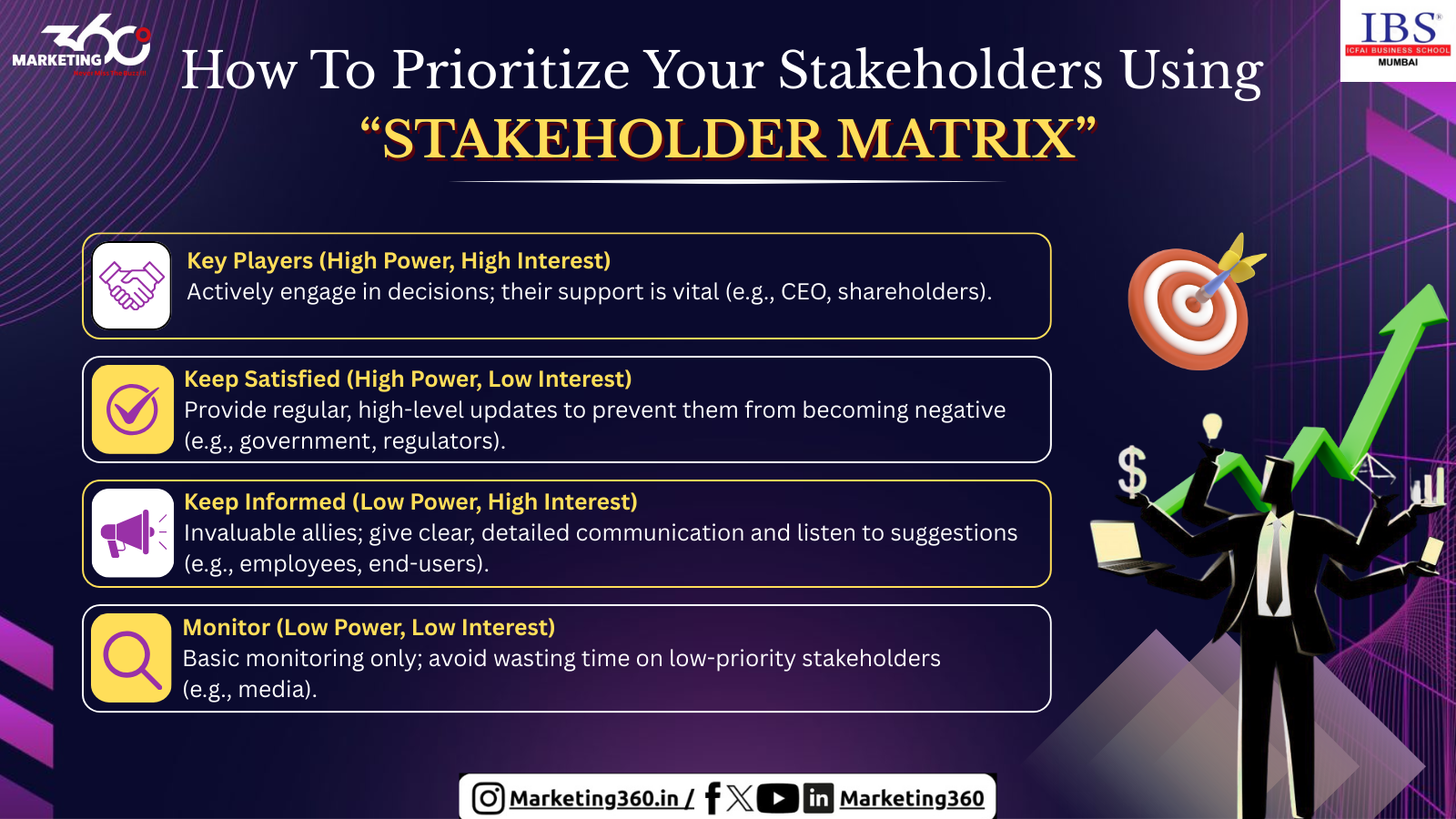
- Key Players –
High power and interest are non-negotiables who must be actively and regularly engaged in decision-making, as their support is vital. A real-life example would be the CEO or shareholders. - Keep Satisfied –
High power, low interest requires providing regular, high-level updates to ensure they are content and prevent them from becoming a negative key player, for example government & regulatory bodies. - Keep Informed –
Low power, high interest, such as employees or end-users, are invaluable allies who should receive clear, detailed communication and whose suggestions should be carefully listened to. - Minimal Effort / Monitoring –
Low power, low interest requires only basic monitoring, this strategic prioritization stops you from wasting time on low-priority stakeholders and focuses your energy on those who hold the keys to success, example media.
A critical takeaway is that this framework, sometimes called the power-interest matrix, is not static. A stakeholder can shift quadrants at any time. For example, a local media outlet (initially low power, low interest) might publish a scathing article about a project’s environmental impact, instantly increasing their interest and, if the story gains traction, their effective power. This sudden change can instantly move them to a key player position that must be addressed immediately. Therefore, regularly review and re-map your stakeholders to ensure your strategy remains as dynamic and successful as the project you are managing. By tailoring your message to each group’s needs, you increase understanding, reduce resistance, and secure faster approvals. Mastering the power-interest matrix is mastering the art of organizational influence.
Conclusion
The stakeholder matrix (or power-interest matrix) is your essential strategic tool for success in any endeavor. by systematically plotting power against interest, you stop guessing and start implementing targeted engagement. This framework guarantees you invest your finite time and resources where they will yield the greatest impact, managing the key players, satisfying the powerful, and mobilizing your interested allies. Remember to keep the matrix dynamic, reviewing it often as interests shift. Master this matrix, and you don’t just manage a project, you master the influence that ensures its triumph.

Dip Shah
Content writer

Neel Kothari
Graphic designer

Parul Chaturvedi
Content Editor