
Key Takeaways
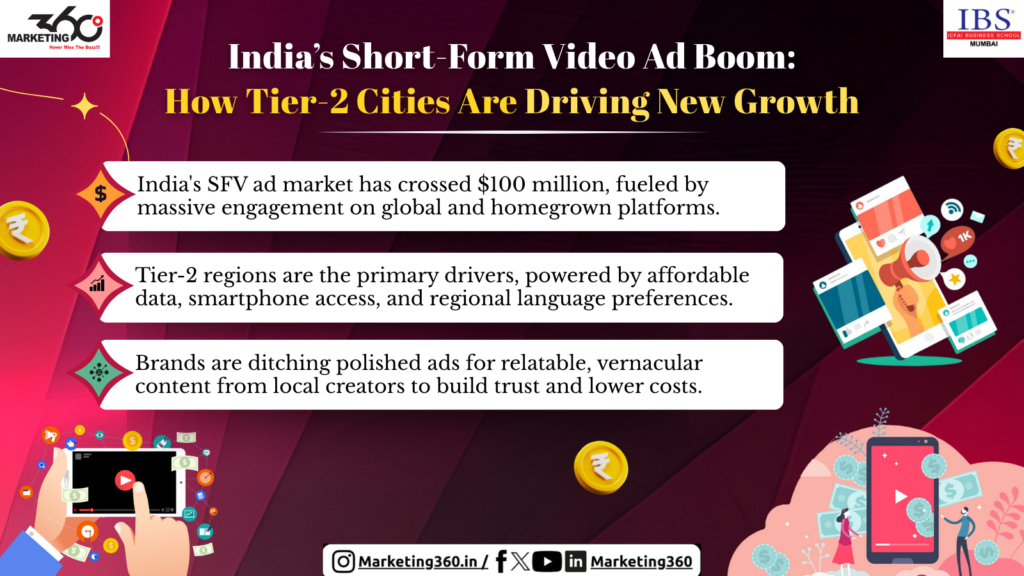
- SFV ads in India hit $100M, led by Tier-2 cities.
- Regional creators & cheap smartphones fuel growth.
- Platforms expand reach beyond metros.
Introduction
Meet Aarav, a college student from Indore, scrolling through short videos during his daily chores. Within seconds, he discovers new brands, local creators, and relatable stories, all through his phone screen. This everyday habit reflects a larger shift in India’s digital ecosystem. Short-Form Video Advertising in India is no longer metro-centric; it is expanding rapidly across Tier-2 cities, redefining how brands connect with consumers.
The Rise of Short-Form Video Advertising in India
India’s short-form video (SFV) advertising market has crossed the $100 million mark, with Tier-2 regions leading this surge. As reported by Afaqs, platforms like YouTube Shorts, Instagram Reels, and homegrown apps are witnessing higher engagement from non-metro audiences. Affordable data plans, widespread smartphone penetration, and content in regional languages have accelerated this growth.
Unlike traditional online ads, SFV content is fast, emotional, and highly relatable. It mirrors everyday life, making advertising feel less intrusive and more conversational, especially for audiences discovering digital media for the first time.
Why Tier-2 Cities Are Powering This Growth
Tier-2 cities represent India’s next wave of digital consumers. These audiences are aspirational, value-conscious, and deeply connected to regional culture. Short-form video advertising allows brands to localize storytelling through vernacular languages, relatable creators, and culturally familiar settings.
Platforms such as Moj, Josh, and Roposo have seen massive adoption in cities like Indore, Nashik, Ranchi, Bhubaneswar, and Kochi, where creators produce content rooted in everyday regional life. From local fashion hauls and festive styling reels to food reviews and devotional content, these creators speak directly to their communities. When brands collaborate with them, advertising feels organic rather than forced.
For example, a creator from Indore styling affordable ethnic wear during Navratri or a food vlogger from Kochi reviewing a regional snack brand often drives stronger engagement than polished metro-centric campaigns. These short videos don’t just promote products; they reflect shared culture, trust, and familiarity, making audiences more receptive and responsive.
For brands, this approach delivers higher engagement at lower costs. For consumers, it builds relatability and confidence. As a result, Tier-2 cities have become fertile ground for experimentation, innovation, and long-term brand building.
Impact on Brands and Consumers
Short-form video platforms have democratized advertising. Small businesses, regional brands, and even local entrepreneurs now compete alongside large corporations. Influencer-led storytelling humanizes brands and builds trust faster than conventional ads.
For consumers like Aarav, this ecosystem offers discovery, entertainment, and connection. Each video becomes a window into new possibilities, products, lifestyles, and aspirations that feel achievable. Advertising here is no longer one-sided; it is participatory, inclusive, and empowering.
Conclusion
The rise of short-form video advertising signals more than just an online trend; it reflects India’s evolving consumer narrative. As Tier-2 cities take center stage, advertising becomes more inclusive, relatable, and culturally rooted.
Short-form video advertising in India proves that growth doesn’t always begin in metros. When brands adapt to regional voices and emerging audiences, they unlock new markets and deeper connections. As consumers grow in confidence and choice, India’s digital economy moves forward, more connected, expressive, and united than ever before.
For young consumers like Aarav, every scroll becomes a discovery of ideas, opportunities, and identities. Advertising transforms from persuasion into inspiration, encouraging confidence, informed choices, and self-expression. When marketing aligns with authenticity and inclusion, it empowers consumers to grow alongside brands.
The rise of short-form video advertising reflects a deeper shift in India’s consumer landscape. As Tier-2 cities gain confidence, advertising is no longer limited to metro narratives but now represents regional voices, aspirations, and everyday realities.
External Link: https://bit.ly/3YDCkFp

Krishi Jain
Content Writer

Neel
Graphic Designer

Yasha Nahata
Content Editor